
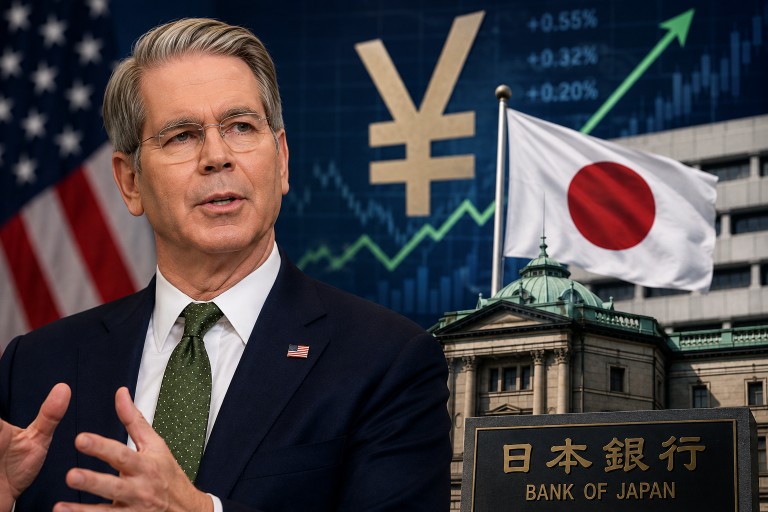
U.S. Treasury Secretary Scott Bessent has conveyed robust backing for Japan’s initiative to bolster the yen, a move that aligns with market anticipations of a potential interest rate hike by the Bank of Japan (BOJ) at its upcoming policy meeting on September 17-18. During discussions with BOJ Governor Kazuo Ueda, held alongside the G20 finance ministers and central bank governors’ assembly in Asheville, North Carolina, Bessent emphasized the role of yen depreciation in driving inflationary pressures. He underscored the necessity of implementing sound monetary strategies and maintaining transparent communication to stabilize inflation forecasts and mitigate undue currency fluctuations.
Market participants are increasingly factoring in the likelihood of another interest rate increase by the BOJ, following its previous adjustment in June. Should the BOJ decide on a rate hike in September, it could bolster expectations for a more accelerated trajectory of monetary tightening. This potential shift comes as Japan’s interest rates continue to climb, with the yield on the country’s 10-year government bonds recently surpassing 3% for the first time since 1996. This rise reflects the anticipation of stricter monetary policies and growing concerns over Japan’s financial stability.
The uptick in yields is also impacting the government’s cost of servicing its debt. Projections from the Finance Ministry suggest that interest expenses could escalate significantly in the future if borrowing costs persist at their current elevated levels. For Japanese households, the increase in interest rates translates to higher mortgage payments, especially for those with fixed-rate loans. Nonetheless, the rising rates are offering advantages for savers and financial institutions by enhancing returns on deposits and long-term investments.
The BOJ is thus navigating a complex situation, striving to reinforce the yen and curb inflation without imposing excessive strain on households, businesses, and government finances. Balancing these elements is crucial for maintaining economic stability in the face of evolving financial dynamics.