
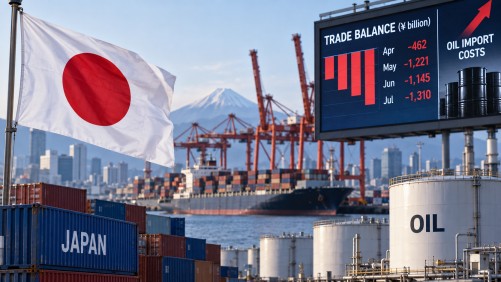
Japan’s persistent trade deficit, which reached approximately 1.1 trillion yen ($7 billion) in August, underscores the country’s vulnerability to global energy market fluctuations, particularly due to its heavy reliance on imported oil. This marks the fourth consecutive month of trade shortfalls as Japan grapples with rising import costs fueled by higher oil prices.
According to preliminary data from Japan’s Finance Ministry, imports surged by 28% year-on-year to 11.15 trillion yen ($71.9 billion). The spike is largely attributed to the escalating energy expenses as geopolitical tensions in the Middle East disrupt oil supplies and shipping routes, notably around the critical Strait of Hormuz.
Despite the challenges on the import front, Japan saw a 19.3% increase in exports, reaching 10 trillion yen ($64.5 billion). This growth was driven by robust demand for Japanese automobiles and computer chips, demonstrating the strength of these sectors amid broader trade uncertainties.
The trade dynamics with key partners reveal a mixed picture. Exports to the United States increased by 24.9%, paralleled by a significant 55.2% rise in imports from the US. Meanwhile, trade with Europe showed an 11% rise in exports and a 20.4% increase in imports, reflecting strong transatlantic economic ties.
Conversely, trade with the Middle East declined, with exports dropping 5.2% and imports falling 4.2%. The ongoing regional instability continues to weigh on Japan’s economic exchanges with these countries, highlighting the complex interplay between geopolitical events and international trade.