
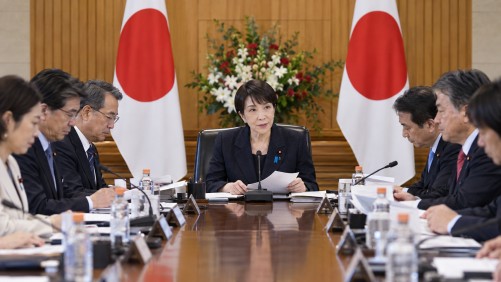
The latest Cabinet reshuffle by Japanese Prime Minister Sanae Takaichi could alter the traditional political landscape by reducing the influence of factions within the ruling Liberal Democratic Party (LDP). This change may impact how government positions are distributed in the future, highlighting a move towards more personalized appointments.
Announced on September 17, Takaichi’s reshuffle saw the retention of most senior ministers while introducing new faces who were appointed based on their specific requests. This approach marks a departure from the decades-old practice of factional negotiations, as Takaichi personally reviewed questionnaires submitted by lawmakers outlining their desired government roles.
Among the notable appointments, Hiroshi Nakatsuka from the junior coalition partner Nippon Ishin was named as the party’s first Cabinet minister, reflecting a broader coalition representation. Hisayuki Fujii, now the internal affairs minister, revealed that Takaichi engaged in discussions regarding his policy priorities before his appointment, indicating a more consultative process.
While the reshuffle retained key figures such as Chief Cabinet Secretary Minoru Kihara, Finance Minister Satsuki Katayama, Defense Minister Shinjiro Koizumi, and Foreign Minister Toshimitsu Motegi, it also attracted controversy. Kazuo Yana and Yoshihiro Seki, both appointed as agriculture and education ministers respectively, have faced scrutiny due to their past involvement in the LDP’s political funding scandal, prompting opposition parties to demand further transparency.
The remodeled Cabinet has a full agenda ahead, with legislative priorities including a potential temporary reduction in the consumption tax on food and a bill concerning Lower House seats. As the new ministers settle into their roles, the effectiveness of Takaichi’s reshuffle in navigating these challenges remains to be seen.