
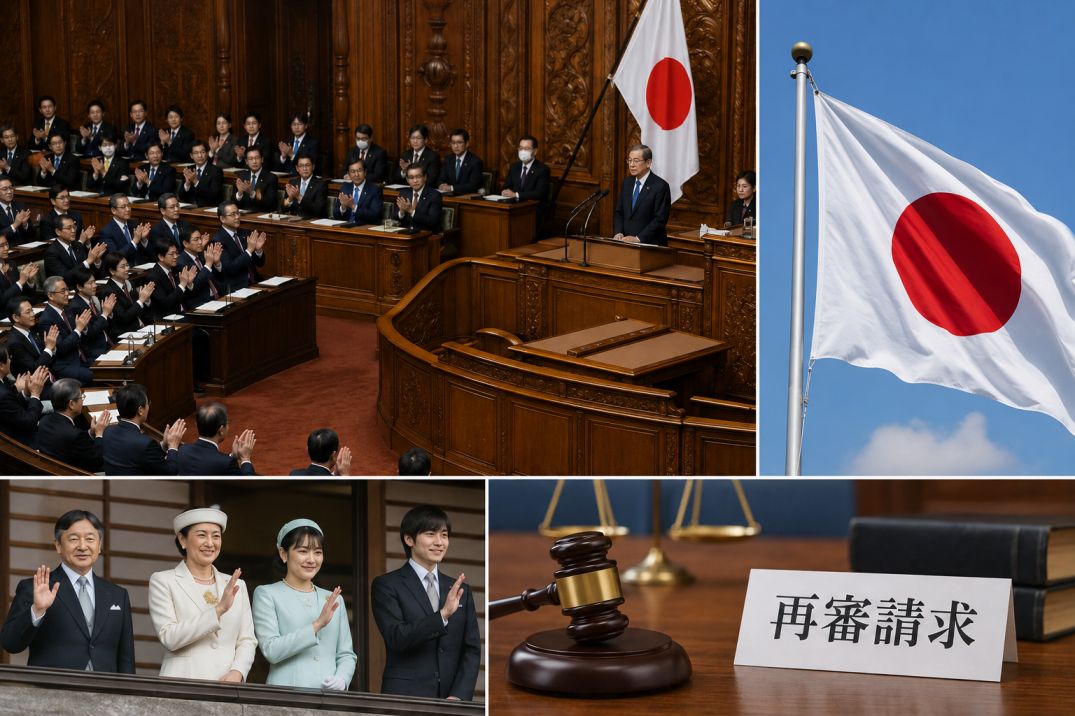
Japan’s legislative body has enacted three significant laws, marking notable advancements in various national sectors. Among them is the first substantial amendment to the Imperial House Law since 1947, which now allows female members of the imperial family to maintain their royal status post-marriage. This amendment is designed to fortify the imperial succession system by also permitting the adoption of male heirs from former imperial branch families.
In a move to safeguard national symbols, the parliament has criminalized the public desecration of Japan’s national flag. Under the new legislation, individuals found guilty of this offense could face penalties of up to two years in prison or a fine amounting to 200,000 yen. Proponents argue that this law is essential for the protection of national symbols, though critics have expressed concerns about the potential implications for freedom of expression.
Additionally, the parliament has approved changes to the criminal retrial process, aiming to expedite the review of wrongful conviction cases. These reforms are intended to address delays, but they have met with resistance from several opposition parties. Critics argue that the reforms do not adequately address issues related to transparency and the disclosure of evidence, suggesting that the measures fall short of necessary comprehensive changes.
These legislative changes highlight Japan’s ongoing efforts to adapt and modernize its legal frameworks in alignment with contemporary needs and societal values. The adjustments to the Imperial House Law reflect a progressive step in addressing issues of gender equality within the royal family, while the criminalization of flag desecration underscores the country’s emphasis on national pride and identity. Meanwhile, the reforms to the retrial process indicate a commitment to refining the judicial system, albeit with some contention regarding the extent of these improvements.