
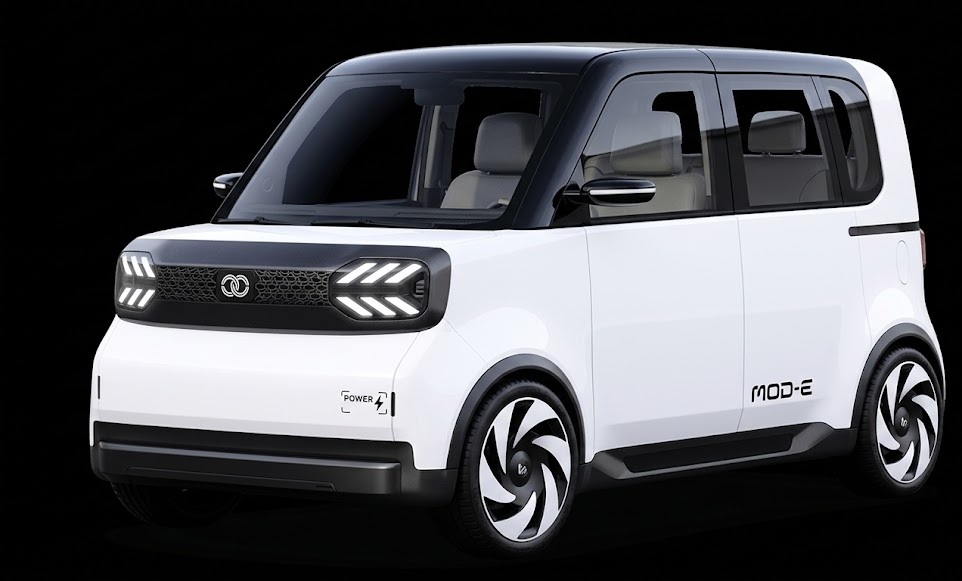
In a significant development for Japan’s automotive industry, a new electric vehicle brand, EMTA, has been introduced through a collaboration involving Japanese automotive companies and China’s Chery Automobile. This new venture, headquartered in Yokohama under EMT Co., plans to roll out its first electric model in 2027, specifically targeting the compact kei car market, a crucial segment within Japan.
The collaboration brings together a diverse group of partners, including Japan’s Autobacs Seven, Anest Iwata, and Chery Automobile, along with a battery manufacturer and others. The EMTA vehicles will be designed and manufactured in China but planned and marketed in Japan. A focus on advanced digital features such as wireless software updates, smartphone integration, and support for automated driving functions is intended to set these models apart in the competitive market.
Kei cars, which make up over a third of new vehicle sales in Japan, are seen as an ideal entry point for introducing electric mobility, particularly because these vehicles are often used for short trips, reducing the emphasis on driving range. EMT is also considering leveraging selected Autobacs retail locations as sales points and has ambitious plans to launch three more electric vehicle models by 2029. Looking further ahead, the company is exploring manufacturing possibilities within Japan and potential expansion into international markets.
The launch of EMTA is part of a broader trend, as the competition in Japan’s kei EV market intensifies. BYD, another Chinese automaker, is preparing to introduce its Racco kei EV to the Japanese market. At the same time, Nissan Motor has recently enhanced its Sakura lineup by adding a more affordable version. Additionally, Suzuki Motor is gearing up to release a kei EV within the current fiscal year, and Honda Motor is working on an electric variant of its well-known N-Box model, planned for a 2028 release.
This surge of new entrants underscores the growing momentum in Japan’s small electric vehicle market. Automakers are increasingly vying to capture the attention of Japan’s urban drivers, who are known for being cost-conscious, thereby setting the stage for a dynamic and competitive landscape in the years to come.